A Guide to Overhead Crane Control Systems: Selecting the Right Interface for Safety and Efficiency
Selecting the correct overhead crane control systems is just as critical as engineering the cranes themselves. The right interface directly impacts operator safety, operational precision, and long-term durability on the factory floor. As a dedicated Original Equipment Manufacturer (OEM), Condra designs and builds robust lifting equipment tailored to the toughest site conditions.
Types of Overhead Crane Control Systems
Here is a comprehensive breakdown of the overhead crane control systems available, along with guidance on choosing the best configuration for your facility.Fixed Pendant Control
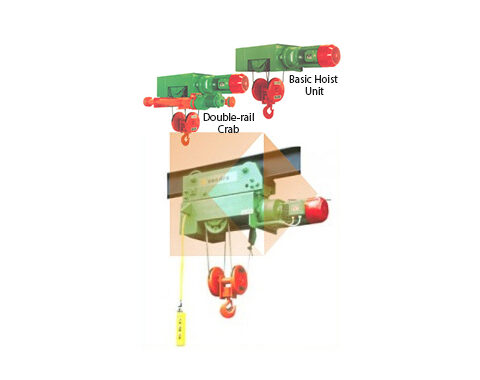
The fixed pendant is the traditional, dependable workhorse that has stayed in use for good reason. Suspended directly from the hoist itself, it moves concurrently with the lifting mechanism. This keeps the operator close to the load for high-precision, close-up positioning, requiring them to walk along the exact path of the travel. A fixed pendant control system is highly effective in smaller workshops or dedicated workstations where the travel path remains entirely clear of obstacles.Mobile Pendant Control (Festoon System)
To give operators greater freedom of movement, a mobile pendant can be installed on an independent track via a cable loop system, commonly known as a festoon. Unlike a fixed pendant, a mobile pendant can slide independently across the crane bridge, allowing the operator to stand clear of hazards or obstructions on the shop floor while keeping a hardwired connection to the crane’s components.Remote Control with Pendant Backup
For maximum adaptability and modern site safety, wireless radio remote controls have become the standard choice, letting operators position themselves at the safest, most advantageous vantage point anywhere within range. However, to ensure zero downtime in industrial environments, Condra configures these systems with a plug-in pendant backup. If the remote control’s batteries drain or the unit is damaged, the physical pendant can be connected immediately, and production does not have to stop.Master-Slave Remote Control
When an application involves lifting complex or exceptionally heavy loads using cranes equipped with two or more hoists, a master-slave remote control system is essential. It lets an operator toggle between controlling each hoist individually for precise levelling, or synchronising them to work as one unit, keeping lifting speed even and load distribution levelled, which reduces structural stress during tandem lifts.Joystick Remote Control
For heavy-duty applications or cranes with complex, multi-speed movements, standard push-button remotes can limit an operator’s dexterity. A joystick remote control offers an ergonomic, intuitive alternative, closer to the feel of a traditional operator cabin, while keeping the operator safely on the ground. As it responds progressively, acceleration and deceleration remain smooth, making it useful when handling fragile or high-value loads that can’t take sudden movements.Modernising Beyond Cabin-Driven Cranes
Historically, large-scale industrial cranes were operated exclusively from an onboard, elevated cabin. While Condra still fully supports and manufactures custom cabin control options for specialised high- duty cycles or harsh environments where the operator needs to be isolated, modern floor-based alternatives have changed how sites operate. Wireless remotes and independent pendants now cover most of what a cabin used to offer, with the added benefit of easier ground-level communication and less structural weight on the crane itself.Semi-Automation with PLC Control
For facilities looking to maximise throughput and eliminate human error, Condra offers semi-automation integrated with a Programmable Logic Controller (PLC). This allows for programmed path planning, automated collision avoidance, and precise, repeatable positioning such as moving a load to a specific bay at the touch of a button. By taking on the repetitive or mathematically complex parts of the lift, PLC integration improves cycle times and reduces wear on crane components, freeing ground operators to focus on overall site safety. Looking to upgrade your existing overhead crane control systems or discuss a robust, custom-engineered lifting solution for your facility? Get in touch with the Condra team.