Understanding South African Lifting Equipment Standards for Safety
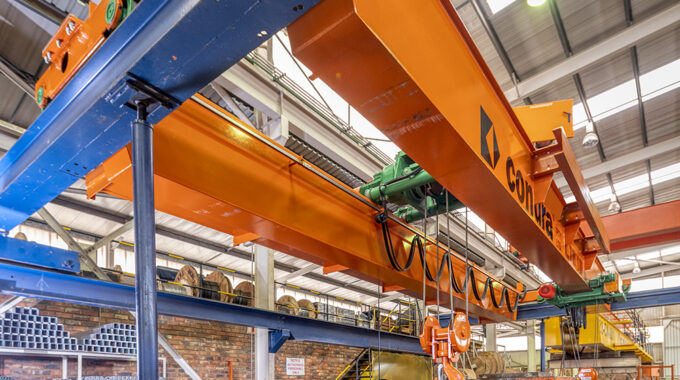
Ensuring the safety and efficiency of cranes and those who operate them goes further than mere operational practices and is a legal obligation in South Africa. Hoists and lifting machinery operate under intense loads and demanding conditions, making strict regulation essential. By aligning design principles, manufacturing and maintenance practices with legislation, industries protect workers, extend equipment life and reduce costly downtime. The lifting equipment standards upheld by Condra ensure safety is engineered into every stage of the process.
The Role of OHSA in Lifting Equipment Standards
The Occupational Health and Safety Act (OHSA), together with the Driven Machinery Regulations (DMR), set out strict requirements for the inspection, testing, and ongoing maintenance of lifting equipment. OHSA and DMR place legal responsibility on employers and suppliers to ensure that lifting equipment standards are met and that the equipment remains safe for use. These regulations require that material handling machinery is suited to its intended duty, operate within their rated capacity, and receive regular ongoing inspection and testing. Compliance is not a once-off exercise but a continuous obligation that upholds safety standards.SANS Codes and Their Practical Impact
SANS (South African National Standards) codes translate legal requirements into practical engineering and operational standards. These codes address design factors, material selection, manufacturing tolerances, and operational safeguards for cranes and lifting devices. Relevant SANS codes and associated lifting machinery standards outline expectations around structural integrity, braking systems, controls, and safety devices. By adhering to recognised SANS codes, manufacturers, such as Condra, provide assurance that equipment meets nationally accepted benchmarks. In addition, Condra designs and manufactures to international standards, including BS2573, the British Standard governing the design of cranes, ensuring equipment meets globally recognised engineering benchmarks.Load Testing Standards
Load testing standards, such as SANS 10375 for in-service cranes, are critical in verifying lifting equipment performance under controlled conditions. Proof load testing confirms that cranes and hoists can safely handle loads exceeding their rated capacity without permanent deformation or failure. These tests validate design assumptions and manufacturing quality before the equipment enters service. Material handling machinery is required to undergo periodic load testing, typically conducted at defined intervals or after installation, repairs or modifications, to verify their ability to safely operate at their rated load capacity. Load testing is mandatory following installation, as well as after any repairs, alterations or modifications, to confirm the equipment continues to meet safety and performance standards. Understanding South Africa’s Usage Regulations- Regular inspection and testing
- Load indicators and limiting device
- Maintaining records
Trust the Compliant Engineering Expertise of Condra
Condra’s commitment to lifting equipment standards ensures the delivery of cranes and hoists that meet and uphold the industry benchmark in quality, value, and performance precision. Our cranes are designed and manufactured up to and including Class 4 and in accordance with ISO, SANS, BS2573, and other internationally recognised standards, and every crane we manufacture, install, commission, service, maintain, and upgrade is carried out in full compliance with OHSA requirements. Consult with our sales team or technical advisors for expert advice and professional assistance.